

Pressure sensors have become a must-have in several industries to monitor the pressure of liquids and gases. You can find them in healthcare devices, manufacturing plants, and water treatment facilities. But when you look at a pressure sensor’s specifications, you often hear the term “4-20 mA output”. As a beginner, this term might feel technical to you, so you might ask: What does 4-20 mA output mean in pressure sensors? Actually, it is a standard electrical signal used by a pressure sensor. But that’s not all. In this guide, I will discuss what a 4-20 mA output means, how these sensors work, and their benefits. So let’s get started.
What Does 4-20mA Output Mean in Pressure Sensors?

A 4-20mA output is a standard electrical signal that a pressure sensor uses to communicate pressure readings to other devices. Here, 4mA represents the lowest pressure value. At the same time, 20 mA represents the highest pressure value within the sensor’s measuring range.
Remember, the pressure and current are closely related. As the pressure changes, the current also increases or decreases accordingly. So this 4-20mA current output range allows the sensor to send accurate pressure readings. How? Suppose there is a pressure sensor that measures pressure from 0 to 100 PSI. When the pressure is 0 PSI, the sensor will send a current of 4mA.
Now, when the pressure reaches 100 PSI, it sends 20mA. If the pressure is in the middle, such as 50 PSI, the current will also be between 4 mA and 20 mA. Here you can see that the term 4 mA refers to the lowest pressure within a sensor, regardless of the range. However, the 20 mA range shows the highest pressure. In this way, the current signal directly reflects the pressure being measured.
This simplicity is why this output method is highly reliable. Even in industrial systems where sensors are located far from control systems, they remain reliable. This is because a 4-20 mA signal can travel long distances with very little loss of accuracy. It means a controller will receive accurate signals to react in case pressure exceeds the limit.
How Do 4–20 mA Pressure Sensors Work?
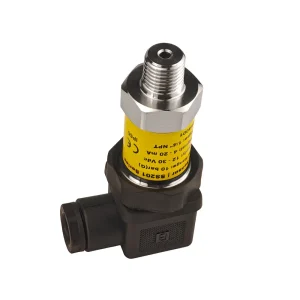
The working of the 4-20 mA pressure sensor is very straightforward. First, a 4–20 mA pressure sensor measures the pressure of a liquid or gas. Inside these pressure sensors, there is a sensing element that reacts whenever the pressure changes. When it detects a change in pressure, the sensor converts the pressure value into an electrical current signal.
But here is one thing: this pressure sensor does not send a pressure reading directly. Instead, it sends a current ranging from 4 mA to 20 mA to another device, such as a controller. Now the controller has the most accurate pressure value in the form of a current output. The reason is that current signals are much less likely to be interrupted by electrical interference when traveling. Since accuracy is most important, it is maintained through these current signals.
But these reading operators cannot understand. That’s why controllers convert these current readings back into readable pressure values. In these sensors, the pressure readings are sent into an electrical output range of 4-20mA. If the sensor detects no change in the pressure of the liquid or gas in the system, it will send a 4 mA signal. However, if it detects a maximum pressure change within its range, it will be sent as a 20 mA reading.
Why Is 4–20mA Ideal for Industrial Environments?
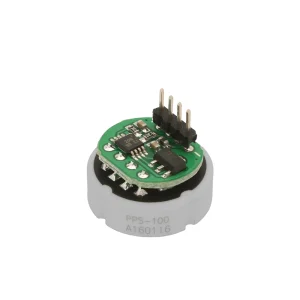
4-20mA pressure sensors have become a popular choice in almost all industries. Several reasons justify its importance there. First of all, these pressure sensors carry the pressure information very accurately. Actually, in large industrial setups, the pressure sensors are often installed far away from the controller. So there is a greater chance that the pressure signal becomes less accurate before reaching the controller.
But 4-20mA pressure sensors are handy in carrying pressure data over long distances without losing accuracy. Secondly, these pressure sensors resist electrical interference very well. In industrial systems, there are large motors, generators, and other electrical devices. All these devices create electrical noise. Regular industrial pressure sensors are often affected by this electrical interference.
But a 4-20mA pressure sensor is much less sensitive to electrical noise, so pressure data is transmitted more reliably. Finally, the 4–20 mA system also makes it easier to quickly detect wiring or sensor problems. In these sensors, the signal typically starts at 4 mA when the system is operating properly. If the current suddenly drops to 0 mA, it is a sign of a broken wire, a power loss, or a sensor failure. So operators quickly detect the problem and resolve it to prevent downtimes.
Types of 4–20 mA Pressure Sensors
Now you know the basics and working of the 4-20mA pressure sensors. Right? Now you must know that these pressure sensors are not always the same. Instead, they come in various sizes and specifications to meet different industrial needs. So let’s dive in and discuss some of the most common types of 4-20mA pressure sensors.
-
- Gauge Pressure Sensors
- Absolute Pressure Sensors
- Differential Pressure Sensors
- Sealed Gauge Pressure Sensors
- Vacuum Pressure Sensors
- Compound Pressure Sensors
Frequently Asked Questions
Why does the signal start from 4mA and not 0mA?
The 4–20 mA signal starts at 4 mA rather than 0 mA to improve system reliability and safety. The 4mA point is called a “live zero”. It means the system is working normally even at the lowest measurement level. So, if the signal shows 4 mA, it indicates that everything is fine and the sensor is active.
Is 4–20mA better than voltage signals?
In most industrial cases, yes, 4–20mA is better than voltage signals. The main reason is that a current signal, such as 4–20 mA, remains stable even over long distances. Also, this signal output is noise-resistant, ensuring the pressure value remains stable.
What happens if the signal drops below 4mA?
In a normal working pressure sensor, the signal should always remain between 4 mA and 20 mA. If the current drops below 4 mA or reaches 0 mA, it usually indicates a problem in the system.
Conclusion
Pressure sensors are the most reliable devices in many industries to measure and control the pressure of liquids and gases. However, they come in different output types. Among those, the 4-20mA pressure sensors are trusted for their accuracy. These pressure sensors send the signal in electrical form within a range of 4-20mA. The 4 mA reading corresponds to the lowest pressure, and the 20 mA reading to the highest pressure among the sensors. These signal types are not interrupted by electrical interference and show exact readings.