

Many industries require careful operations and proper management of the temperature and pressure systems. Pressure Sensors are integral components of their operations, but accuracy is required. Since Industrial sectors, such as oil, petrochemicals, and others, are subject to aggressive pressure and temperature fluctuations, you need a transducer that withstands these conditions.
High-pressure, temperature transducers are the ultimate solution. But most people don’t know which pressure transducer is the best option. They need proper guidance. Today, we will evaluate high-pressure temperature transducers and guide on selecting them.
What is a High Temperature Pressure Transducer?

High-Temperature Pressure Transducers differ from standard pressure and temperature sensors in their operating ranges. They accurately measure the pressure changes in systems that exceed normal temperature levels.
Conventional pressure sensors can’t measure pressure at high temperatures, while these high-temperature pressure transducers can.
The typical exceeding temperature ranges are:
- 125°C (257°F)
- 200°C (392°F)
- 350°C (662°F)
- 500°C (932°F) or higher for specialized applications
These pressure sensors feature specialized systems, technologies, and measurement options to withstand high temperature and pressure.
Key Factors to Consider When Selecting a High Temperature Pressure Transducer
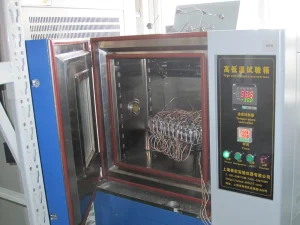
When choosing a high temperature pressure sensor, you should know the material, applications, and requirements. Here are a few tips for buying high-temperature pressure transducers.
Operating Temperature Range
The very first thing to know is the operating temperature range. Since you are deploying your pressure sensor in high-temperature conditions, you must confirm that it can withstand that temperature range.
You should know the following aspects about your sensor.
- The standard temperature operating range.
- The maximum temperature it can handle.
- Temperature cycling frequency
The right choice is always to buy high-pressure, high-temperature transducers with a temperature range higher than your applications require.
Pressure Range
Pressure range also matters a lot. The right high-temperature pressure sensor must also have the required pressure range.
Here is how the pressure range is included:
- Vacuum
- Low pressure
- Medium pressure
- High pressure
- Ultra-high pressure
Buying an ultra-high-pressure sensor is overkill if your required pressure range is lower. Buying an undersized pressure sensor can cause it to fail under high-pressure conditions. Therefore, you should know your pressure range before buying a pressure sensor.
Sensor Technology
Several sensor technologies might perform well in high-temperature conditions. However, based on your needs, you should prefer one over the other.
For example:
- Piezoelectric pressure sensors are modern and suitable for dynamic pressure changes and quick pressure measurements.
- Strain gauge pressure sensors are accurate and deliver results consistently.
- Thin-film pressure sensors are suitable for high-temperature industrial applications and provide thermal stability under these conditions.
Accuracy Requirements
How accurate do you want your pressure readings to be? It matters and varies from application to application. For example, in aerospace and pharmaceutical manufacturing, there is a critical need for high accuracy.
While other applications might achieve moderate accuracy, accuracy depends on the sensor technologies, operating mechanisms, and measurement ranges.
Material Compatibility
Material Compatibility is essential because pressure sensors must operate in industrial environments. Without proper compatibility, they might fail to provide the required results.
There are different types of materials with their unique features.
- Stainless Steel is cost-effective, efficient, and provides the required functionality in harsh industrial conditions.
- Inconel is a chromium-nickel alloy with excellent heat resistance and high performance under high-temperature conditions.
- Hastelloy is a nickel-based superalloy with higher durability and stability at high temperatures.
You should choose each material based on its compatibility with your application, cost, and durability.
Output Signal Requirements
Output signals are essentially a means of interpreting pressure readings.
There are two types of output signals.
- Analog Outputs have 4–20 mA, 0–5 V, and 0–10 signal measurement ranges. It is simple and efficient to integrate.
- Digital outputs include RS485, Modbus, and CAN Bus. They are advanced, offer more features, and give accurate data in digital representations.
Thermal Isolation
Does your pressure sensor have thermal isolation features? It reduces excessive heat, provides cooling to applications, and prevents long-term damage.
In extreme environments, modern pressure sensors come with advanced features, such as:
- Cooling extensions
- Capillary tubes
- Remote diaphragm seals
- Heat sinks
It reduces the chances of excessive heat buildup and provides a more efficient way to perform.
Environmental Conditions
Since most pressure transducers are installed in industrial sectors, aggressive pressure fluctuations are common.
Environmental conditions differ from those in normal environments. There are a few more challenges for the pressure sensors. These include:
- Vibration
- Shock
- Humidity
- Dust
- Chemical exposure
- Electromagnetic interference
You should buy a high-temperature pressure transducer that protects against these conditions and provides accurate pressure readings without risk. Moreover, check the IP rating for dust and humidity protection for high reliability and longevity of your sensors.
Response Time
Response time is straightforward but a critical factor you can’t ignore. It helps you understand how quickly your pressure sensors measure and respond to pressure and temperature changes.
A fast response time is crucial for a few applications, such as:
- Combustion testing
- Hydraulic systems
- Aerospace testing
- Dynamic process control
Remember, a pressure sensor’s fast response time can cost you more. Therefore, you should know about your applications and their response time requirements. Buy only when you are sure of all the features of your high-temperature pressure transducers.
Conclusion
When choosing a high-temperature pressure transducer, focus on material quality, operating range, and affordability. Most pressure sensors look alike, but they can’t withstand higher temperatures, which can cause inaccurate pressure measurements. So, you should buy compatible pressure sensors that are accurate and perform consistently.
Do you want to buy high-quality high-temperature pressure transducers? Contact Sendo-sensor. Our high-temperature pressure transducer SS303 features advanced technology and withstands harsh conditions. Moreover, it offers safety and stable performance in various industrial settings. Check out our sensor right away!