

The automotive industry has to undergo various daily applications. A range of options, such as pressure checking in the tires or testing oil pressures, is necessary. As a routine maintenance task, users have to check the pressure and utilize the comprehensive automotive pressure sensors for accurate results.
Do you want to know how automotive pressure sensors are helpful? Today, we will discuss different types of automotive pressure sensors and understand how they can be beneficial in these applications.
What is an automotive pressure sensor?
An automotive pressure sensor is a device or tool that measures the pressure changes of oil, liquid, or gases. It takes readings of pressure and transforms them into electrical signals for the data interpretation.
Depending on whether you are using an analog pressure sensor or a digital one, the value displayed varies.
There are a few tasks of automotive pressure sensors in the automotive industry.
- Monitor oil pressure to prevent engine damage
- Measure tire pressure for safety and fuel efficiency
- Check coolant system pressure to avoid overheating
- Monitor fuel pressure for optimal combustion
- Support brake system safety
- Regulate climate control systems
- Manage air suspension systems
- Ensure accurate airbag deployment timing
You might wonder why automotive pressure sensors should be there. Here are a few reasons.
- Early problem detection. It is fun catching issues before they become costly failures.
- Performance optimization. With the problem detection, fine-tuning fuel injection, ignition timing, and cooling systems becomes flawless.
- Safety assurance. Accurate pressure can avoid accidents due to low tire pressure, brake failures, or overheating.
- Regulatory compliance. Meeting legal requirements such as TPMS in many countries allows you to install the sensors without any legal issues.
Types of automotive pressure sensors
Based on the working mechanism and pressure sensing options, there are four crucial types of automotive pressure sensors. Here are these four options.
Piezoresistive Sensors
Piezoresistive sensors check the resistance and sense the pressure changes, allowing for accurate readings. It is one of the most common, cost-effective, and exact pressure sensors. However, applications can be different compared to other types because it is ideal for most automotive liquid/gas.
Capacitive Sensors
Capacitive sensors sense the change in capacitance and transmit the signals. They are low-power consumption sensors with a range of applications. You can use them in applications like tire pressure monitoring and HVAC systems.
Piezoelectric Sensors
It is one of the most advanced pressure sensing systems with the piezoelectric change through finger movements. This sensor is ideal for the detection of rapid pressure changes, such as in engine knock detection.
Optical and Resonant Sensors
If you have installed the pressure sensors in those spaces with maximum electromagnetic interference, optical and resonant sensors are the ideal choices.
They offer high immunity to electromagnetic interference and stabilize the electrical signals. They are excellent for long-term stability and are used in advanced applications.
Automotive Pressure Sensor Applications
Are you up for automotive pressure sensor applications? We have added a few critical options and chased the proper methods and tools.
Let’s take a look at different systems that utilize the automotive pressure sensors.
Engine management system
The engine involved different types of fuels and liquids to check the pressure and test the system. Let’s take a look at other uses of automotive pressure sensors.
- Manifold Absolute Pressure (MAP) Sensors are helpful in engines. They can measure intake air pressure and determine fuel injection with ignition timing.
- Fuel Pressure Sensors ensure there is a correct fuel rail pressure and proper combustion.
- Oil Pressure Sensors detect drops in oil pressure and avoid severe engine wear or failure.
- Coolant Pressure Sensors detect leaks or overheating early. They are ideal for protecting the engine from damage.
Transmission system
In vehicles, transmission of power often occurs through the hydraulic systems. They involve the use of liquid. A higher or lower pressure can influence the applications and cause damage to internal components.
Here are a few applications and uses of automotive pressure sensors.
- Hydraulic Pressure Sensors monitor clutch and shift actuator systems for optimal performance.
- Line Pressure Sensors regulate the fluid pressure in automatic transmissions. They help avoid slippage and wear.
- Abnormal pressure detection in the early phases can prevent costly transmission rebuilds.
Fuel delivery system
The fuel delivery system relies on the press changes and delivery of the fuels. Here are a few applications and benefits of the pressure sensor system at such a point.
- Fuel Rail Pressure Sensors measure the fuel pressure supplied to injectors.
- Low-pressure fuel Sensors monitor in-tank fuel pump operation.
- Prevents both lean and rich running conditions, reducing emissions.
Brake system
The brake system has the hydraulic tools and devices to operate and sense the pressure changes. It helps evaluate the system better, and a slight change in pressure can be disastrous.
Let’s see the uses and advantages of automotive pressure sensors.
- Brake Line Pressure Sensors locate the force applied during braking.
- ABS (Anti-lock Braking System) uses pressure data to prevent wheel lock-up.
- EBS (Electronic Braking System) makes balanced braking in commercial vehicles
HVAC and climate control system
HVAC and climate control systems in vehicles are also crucial. They enable smooth functionality and the following features and benefits.
- Refrigerant Pressure Sensors ensure the AC system runs at optimal pressure.
- It helps prevent compressor damage from low refrigerant levels.
- Pressure Sensors increase cabin comfort and energy efficiency, making a top-rated experience overall.
Emission control system
Regulatory compliance and environmental adherence are necessary. Only a positive and better pressure control system provides optimized functionality.
Here are a few use cases.
- Exhaust Back Pressure Sensors are present in vehicles. They monitor emissions control devices like catalytic converters and particulate filters.
- Evaporative Emissions System Pressure Sensors detect leaks in fuel vapor systems. Users can immediately take actions and correct minor errors before they snowball.
- Ensures vehicles meet emission standards and avoid regulatory fines.
Sendo-sensor Pressure Sensors
Sendo is one of the globally acclaimed brands that offers a wide range of automotive pressure sensors. We have the four most famous sensors.
Liquid Pressure Sensor SS301
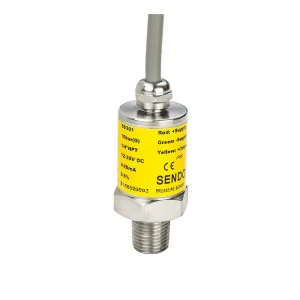
If your vehicles have a variety of liquids ranging from oil to fuel, the Liquid Pressure Sensor SS301 is the perfect selection. It has one of the most powerful pressure measurement systems with advanced monitoring. The stainless steel body allows better durability and long-term performance.
Applications
- Engine oil pressure monitoring
- Coolant system leak detection
- Fuel pressure measurement
- Hydraulic system monitoring
Key Advantages
- CE conformity
- Stainless steel 316L diaphragm
- Piezoresistive pressure sensor, oil-filled
- A wide range of pressure and electrical connections
- All stainless steel welding structure, NO O-ring inside
- Output signals: 4-20mA and 0-10V, 0-5 voltage output
- High accuracy for ECU decision-making
- Wide operating range for different fluid systems
Stainless Steel Pressure Sensor SS208

Does your automotive system face constant stress and harsh weather conditions? Don’t worry at all, as there is a robust stainless steel construction in the SS208 pressure sensor that allows persistent performance under all stress conditions.
The applications and benefits include:
Applications
- Hydraulic brake system
- Transmission oil monitoring
- Fuel tank pressure measurement
- Off-road vehicle hydraulic systems
Features and Benefits
- CE conformity
- Low cost and high quality
- Stainless steel 316L diaphragm
- -40 to 105°C wide working temperature
- All stainless steel structure, no O-ring inside
- 0.5-4.5V, 0-10V, 4-20mA analog output signal
- Strong resistance to mechanical stress
- Excellent media compatibility
- Stable performance under extreme conditions
Water pressure sensor SS207
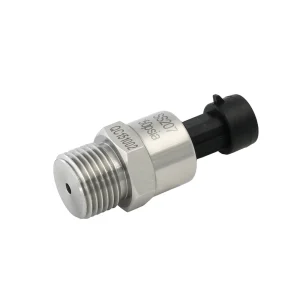
Water pressure sensor SS207 is ideal for the water pressure changes in your vehicles. To avoid oxidation and corrosion, this sensor comes with waterproofing and corrosion-resistant features.
We have added a few applications and features of this pressure sensor.
Applications
- Engine cooling system monitoring
- Windshield washer pressure measurement
- HVAC coolant loop monitoring
- EV battery coolant system control
Features
- Optimized for water and coolant media
- High corrosion resistance
- Long service life in demanding automotive applications
- CE conformity
- Low cost and high quality
- Compact, rugged construction
- Stainless steel 316L diaphragm
- -20 to 105°C wide working temperature
- 0.5-4.5V, 0-5V, 0-10V various voltage output
Auto oil pressure sensor SS204

Auto oil pressure sensor is one of the most advanced systems that gives accurate readings and features at affordable prices. It helps safeguard pressure changes and enables the smooth control of the system.
There are a few pros and applications discussed here.
Applications
- Engine oil lubrication monitoring
- Oil pressure warning systems
- ECU oil pressure integration
Key Advantages and Features
- Dedicated design for oil systems
- CE conformity
- Low cost and high quality
- Compact, rugged construction
- Stainless steel 316L diaphragm
- -20 to 105°C wide working temperature
- 0.5-4.5V,0-5V,0-10V various voltage output
- Quick response to pressure changes
- High reliability in high-temperature environments
Conclusion
First, decide about the applications for which you want to deploy the pressure sensor. Then check the quality of construction and durability of the tools. Purchase only if you get the right supplier and quality results.
If you want premium-quality pressure sensors at affordable prices, Sendo-sensor is always there for you. We have a unique range of pressure sensors of premium quality. Explore our varieties of pressure sensors now!