

Introduction
Pressure sensors are critical tools used in several industries. Whether in manufacturing or pharmaceutical applications, pressure sensors help detect pressure changes and maintain conditions under control to prevent mishaps caused by incorrect pressure measurements.
But there is one common question often asked— do pressure sensors work at 450°C? The simple answer is yes, but not all the pressure sensors can measure at this temperature. Only a few can offer pressure measurement at such high temperatures.
Do you want to know them? This guide is for you. We have discussed the pressure sensors for higher temperature ranges and understood their mechanism and components.
Do Pressure Sensors Work at 450°C?
Yes, but standard pressure sensors fail to provide accurate pressure measurements in such a high temperature range. It is because of:
- Zero-point drift
- Sensitivity changes due to high temperature
- Seal failure occurs as the seal starts to deteriorate at higher temperatures.
- Electronic damage
- Permanent calibration errors
There is a range of standard pressure sensors that offer various temperature ranges and measurement accuracy. It is given below.

How High-Temperature Pressure Sensors Work
Since high-temperature pressure sensors differ from standard ones, they have unique features and behave differently. Here is the list of steps and mechanisms through which high-temperature pressure sensors work.
High-Temperature Materials
One of the most significant factors in high-temperature pressure sensors is the material used. It has materials that can withstand high temperatures without issue.
They have more durable materials for construction. For example:
- Stainless steel
- Inconel alloys
- Hastelloy
- Titanium alloys
- Nickel-based superalloys
These materials are famous for several features. They can avoid:
- Thermal expansion under high temperature conditions.
- Corrosion in the moisture conditions
- Oxidation in marine or water conditions
- Mechanical fatigue due to robust construction.
Remote Electronics Design
High temperatures are extremely dangerous to the electronic components of pressure sensors. Therefore, most pressure sensors have a remote electronic design with:
- Капиллярные трубки
- Удлинители системы охлаждения
- Диафрагменные уплотнения дистанционного управления
It means your electronic components remain in a cooler environment while your sensor components operate at high temperatures.
This remote electronic design helps with:
- Longer sensor life
- Higher accuracy
- Better electronic protection
- Easier maintenance
Special Filling Fluids
For high-temperature pressure-sensing conditions, you should also have specialized filling fluids. The common features of the fluids should be:
- High boiling points
- Low thermal expansion
- Stable viscosity
- Chemical resistance
It helps with accurate measurements of pressure under high-temperature conditions.
Advanced Signal Compensation
Modern high-temperature pressure systems don’t use the average signal systems. They have specialized advanced mechanisms that operate under high temperatures, bypassing major signal issues, such as:
- Temperature drift
- Material expansion
- Nonlinear response
- Long-term aging
Advanced signals enable greater accuracy in pressure measurements under high-temperature conditions.
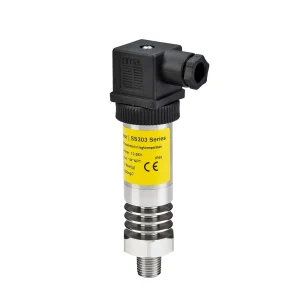
Pressure Sensor Technologies Suitable for 450°C
Pressure Sensors operate through various technologies. We have discussed a few of the most famous for high-temperature conditions.
Тензометрические датчики давления
Metal strain gauges are widely used worldwide for their versatility. They have metallic components, and pressure strains are measured in response to pressure changes.
Преимущества:
- High durability
- Good long-term stability
- Reliable performance
- Wide pressure ranges
They are ideal choices for isolating electronic components.
Sapphire Pressure Sensors
Sapphire is one of the best options for high-temperature pressure sensors. They can operate at higher temperature ranges because of:
- Excellent thermal stability
- High mechanical strength
- Chemical resistance
- Minimal drift
Even some sapphire pressure sensors can measure at higher temperatures than 450°C.
Fiber Optic Pressure Sensors
Fiber-optic pressure sensors are famous for their lack of electronic components and for accurate pressure measurements. Even at higher temperature ranges, they offer stable pressure measurement. Moreover, they don’t experience electromagnetic interference.
There are a few benefits to the fiber-optic pressure sensors discussed.
- Immune to electromagnetic interference
- Extremely high-temperature capability
- Устойчивость к коррозии
- Safe in explosive environments
Because of no electromagnetic interference, such sensors are commonly used in:
- Jet engines
- Turbines
- Nuclear facilities
Thin-Film Pressure Sensors
Most combustion systems use thin-film pressure sensors. The peculiar feature is their installations on the metal diaphragms.
They can sustain higher temperatures and offer the following benefits.
- Высокая точность
- Excellent repeatability
- Strong vibration resistance
| Pressure Sensor Technology | Maximum Temperature Capability | Точность | Typical Applications |
|---|---|---|---|
| Sapphire Pressure Sensor | Up to 450–600°C | Very High | Aerospace, power plants, oil & gas |
| Fiber Optic Pressure Sensor | Up to 700°C+ | Very High | Jet engines, nuclear plants, turbines |
| Thin-Film Pressure Sensor | Up to 400–500°C | High | Automotive testing, industrial machinery, combustion systems |
| Metal Strain Gauge Pressure Sensor | Up to 350–450°C | High | Boilers, hydraulic systems, process industries |

Factors to Consider When Choosing a 450°C Pressure Sensor
There are a few factors to consider when choosing such high-temperature pressure sensors. Here is the checklist.
Maximum Operating Temperature
What is the maximum temperature range on which your sensor operates? The higher the better. However, you should ensure your pressure sensor always meets the 450°C temperature stability requirement.
Диапазон давления
Oversized or undersized pressure ranges are always dangerous because they bring inaccurate measurements. To avoid errors, you should thoroughly check the pressure ranges and measure the overall pressure.
Требования к точности
Higher accuracy increases the costs. However, industrial applications always require a high accuracy in the pressure measurement with an error of:
- ±0.1%
- ±0.25%
- ±0.5%
You should choose affordable pressure sensors with the highest possible accuracy.
Media Compatibility
You don’t have to focus only on the temperature stability and pressure measurements. Instead, your materials should be compatible with:
- Corrosive
- Abrasive
- Viscous
- Oxidizing
You should get high-performance and accurate pressure measurements even in these environmental conditions.
Installation Methods
There can be different connections and installation methods for the pressure sensors.
Например:
- Threaded connections
- Flanged mounting
- Diaphragm seals
- Welded fittings
Whatever installation method is used, you should do it thoroughly and ensure proper sealing. Remove any instances of leakage and improve performance stability.
Заключение
Specialized pressure sensors can operate in the 450°C temperature range. To determine whether your pressure sensors can operate within this range, assess their material quality, temperature stability, and other temperature-withstanding features. Standard pressure sensors often fail at such a temperature.
Are you looking for high-quality, high-temperature pressure sensors? Сендо-сенсор is a prominent name in the industry, manufacturing high-quality pressure sensor solutions with durable performance. Contact our experts to get quotes for your pressure sensors right away!