

Pressure Sensors are crucial components across various industrial sectors, including industrial equipment, automation systems, medical devices, automotive applications, hydraulic machinery, HVAC systems, and many other products. Choosing the correct pressure sensor ensures timely management and accurate pressure measurements.
But most people are confused about the two main types of sensors. They often aren’t sure whether to choose standardized pressure sensors or OEM pressure transducers. We discuss both types of sensors and compare them in detail.
What is a Standardized Pressure Sensor?
Standardized pressure sensors are the most commonly available sensor systems, designed for different applications. Manufacturers design these models for different applications.
Such models come with predefined combinations of pressure ranges, output signals, electrical connections, pressure ports, housing materials, and accuracy levels.
For example, a pressure sensor may be available with:
- 0–10 bar pressure range
- 0–16 bar pressure range
- 4–20 mA output
- 0–10 V output
- Digital communication
- Stainless steel housing
- Standard threaded pressure connection
- Predefined electrical connector
- Fixed accuracy specifications
Advantages of Standard Pressure Sensors
Compared to other sensor types, you might wonder why they matter and what benefits they deliver.
We have added a few benefits of such standard pressure sensors here.
- Faster product development
- Lower initial engineering costs
- Availability from established suppliers
- Proven performance
- Easier replacement
- Straightforward procurement
- Lower minimum order requirements in many cases
- Access to established technical documentation
- Reduced development risk
What is a Custom OEM Pressure Sensor?
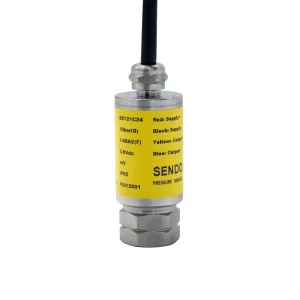
Compared to standard pressure sensors, custom OEM pressure sensors aren’t manufactured off-the-shelf. Instead, manufacturers build them to meet the specific requirements of the application.
If you want a pressure sensor that fits your application and has a custom pressure and temperature range, custom OEM pressure sensors are the ideal option.
For example, a custom OEM pressure sensor fits into:
- A restricted installation space
- Uses a proprietary connector
- Measures an unusual pressure range
- Operates at high temperatures
- Provides a specific electrical output
- Uses a particular wetted material
- Withstands vibration or shock
- Meets application-specific accuracy requirements
- Has a customized pressure port
- Integrates into an existing electronic architecture
Standardized Vs OEM Pressure Transducer
If you don’t know the differences between standard and OEM pressure transducers, wehave outlined the key differences.
|
Difference
|
Standardized Pressure Sensor
|
Custom OEM Pressure Sensor
|
| Design | Predefined | Application-specific |
| Personnalisation | Limited | Extensive |
| Development time | Shorter | Longer |
| Initial cost | Lower | Higher |
| Mechanical integration | Standard | Product-optimized |
| Electrical interface | Predefined | Can be customized |
| Accuracy/performance | Fixed specifications | Can be optimized |
| Environmental resistance | Catalog-defined | Can be application-specific |
| Low-volume production | Excellent | May not be economical |
| High-volume production | Good | Often more attractive |
| Replacement | Generally easier | More supplier-dependent |
| Product differentiation | Limited | Higher |
| Engineering involvement | Lower | Higher |
Design and Customization
Design and customization matter when you don’t find the right features in your pressure transducers. Not every transducer is easy to customize.
Standard pressure sensors have a fixed design and are difficult to customize. They may come with the following features.
- Fixed product design
- Predefined dimensions
- Standard pressure ports
- Standard connectors
- Predefined electrical outputs
- Limited configuration options
- Designed for multiple applications
Custom OEM pressure sensors have a custom design. This means you can change them according to:
- Application-specific design
- Customized dimensions
- Special pressure ports
- Custom connector configurations
- Specific electrical outputs
- Customized calibration
- Product-specific materials and packaging
Development Time
Development is important when you need the sensors faster and in a wide variety. Customization may take time to produce.
Do you want sensors fast? Standard Pressure Sensors are readily available with the following features.
- Faster sample availability
- Minimal engineering development
- Faster prototype integration
- Suitable for short product development cycles
- Lower design risk
Custom OEM pressure sensors are not readily available. Therefore, they take more time and may have:
- Longer development process
- Engineering coordination required
- Prototype development may be necessary.
- Additional validation may be required.
- Production approval takes longer.
Initial Cost
Initial cost is crucial when you want to save money and need affordable options. The initial cost varies.
Standard Pressure Sensors are pre-designed and made. Therefore, their initial cost is lower due to bulk production.
On the other hand, consider custom OEM pressure sensors if you have a higher budget than standard ones and need custom pressure and other features.
Mechanical Integration
Mechanical integration may present several challenges. For example, a sensor may have:
- An unsuitable thread
- Excessive body length
- Incorrect connector orientation
- Limited mounting options
- An unsuitable pressure port
- Too much installation space requirement
Standard Pressure Sensors may pose challenges when they don’t match your application. They are easy to integrate only if you have the right design.
Custom OEM pressure sensors are available in various designs to meet specific requirements. They match easily when manufacturers prepare them to meet the demands of the given applications.
Electrical Interface
The electrical interface is crucial in various applications.
Standard Pressure Sensors don’t have a custom electrical interface and may offer:
- Standard voltage outputs
- Standard current outputs
- Common digital interfaces
- Predefined connectors
- Fixed pin configurations
Custom OEM pressure sensors offer a custom electrical interface with the following features.
- Custom connector options
- Customized pinouts
- Specific cable lengths
- Customized signal scaling
- Application-specific communication requirements
- Specialized electrical packaging
Performance and Accuracy
Are you looking for performance and accuracy? It varies by application and may include the following requirements.
- Narrow pressure measurement range
- Haute précision
- Low hysteresis
- High repeatability
- Low temperature drift
- Specific response time
- Customized calibration
- Particular total error limits
- High long-term stability
Let’s compare standard pressure sensors with custom OEM pressure sensors.
Standardized Sensors have the following features and performance options:
- Proven specifications
- Suitable for conventional requirements
- Limited ability to optimize performance
- Manufacturer-defined calibration
On the other hand, Custom OEM Sensors offer customization and can have varying pressure performance with the following features.
- Performance can be optimized around the application.
- Customized calibration possible
- Specific temperature compensation
- Application-specific response characteristics
- Greater control over required performance
Environmental and Media Compatibility
Environmental Conditions vary from one application to another. Since most of the sensors are installed in outdoor industrial sectors, they may encounter different challenges, such as:
- High temperatures
- Low temperatures
- Vibrations
- Mechanical shock
- Moisture
- Poussière
- Corrosive chemicals
- Aggressive fluids
- Pressure spikes
- High-pressure conditions
Let us know which pressure sensor is suitable for your conditions.
Standardized Sensors are ideal only for the following features and conditions.
- Good for established environmental conditions
- Predefined material options
- Fixed environmental ratings
- Limited customization
Custom OEM Sensors can be very specific in their applications and may be suitable for a variety of applications because:
- Application-specific materials
- Specialized sealing
- Customized environmental protection
- Better suited to unusual operating conditions
- Potential for specialized media compatibility
Which One Should You Choose?
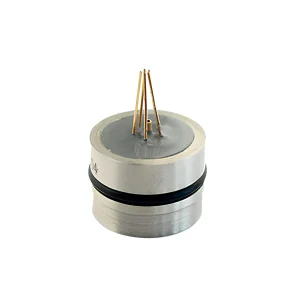
If you’re still unsure which one to choose, don’t worry. We have added a few conditions to help you choose custom OEM pressure sensors.
When Standard Pressure Sensor is Best
You should select standard pressure sensors when:
- Your required pressure range is common.
- Standard accuracy is sufficient.
- The available sensor physically fits your product.
- A standard pressure port is acceptable.
- A standard connector works with your electronics.
- Environmental conditions are within the catalog specifications.
- You are developing a prototype.
- Production volume is low or uncertain.
- You need a fast time-to-market.
- Easy replacement is important.
When OEM Pressure Sensor is Best
Consider OEM pressure sensors in the following conditions.
- No standard sensor meets all your requirements.
- Installation space is limited.
- You require a unique pressure port.
- You need a special connector or pinout.
- Your product requires unusual pressure ranges.
- You need application-specific accuracy.
- The sensor operates in a harsh environment.
- The measured medium requires special materials.
- You need customized calibration or compensation.
FAQ
- Can a standard pressure sensor be customized instead of developing a completely new sensor?
Yes. You can customize a standard pressure sensor by changing the pressure port, housing, connector, cable, calibration, output, materials, or other specifications.
- When is a custom OEM pressure sensor worth the investment?
When you can’t find a standard pressure sensor for your application, a custom OEM pressure transducer is the best option and worth the investment.
- Are custom OEM pressure sensors more expensive than standard sensors?
Yes. Custom OEM pressure sensors cost more than standard pressure sensors because of their custom requirements.
- When should I choose a standard pressure sensor?
A standard pressure sensor is ideal when the existing pressure sensor already has the features you need. For example, the pressure range, accuracy, environmental conditions, mechanical dimensions, electrical interface, and other specifications match your requirements without significant modifications.
Conclusion
Not every sensor type is ideal for you. Instead, choose standard pressure sensors when you need speed, simplicity, lower initial investment, prototyping, and standard applications. Custom OEM pressure sensors are ideal choices for optimized integration, specialized performance, demanding environments, unique mechanical or electrical requirements, and higher-volume products.
If you are looking for OEM pressure sensors, contact Sendo-sensor. We produce premium OEM pressure transducers, ensure they match your needs, and confirm their premium quality and durability. Contact our experts to have your custom OEM pressure transducer prepared.