

Industrial pressure sensors can be used under harsh conditions. They can encounter moisture, chemicals, heat, vibration, and pressure changes. These conditions can cause failure in weak materials and shorten sensor life.
Stainless steel pressure sensors are a part of the solution for such severe applications. They are highly resistant to corrosion and damage. They can also help maintain pressure for a longer period. However, optimum selection still depends on the process medium and process conditions.
This article will cover the primary benefits, common applications, important limitations, and important selection criteria.
Key Highlights:
- Stainless steel pressure sensors are highly resistant to physical damage, moisture, and corrosion.
- Ideal for hydraulic systems, pumps, water treatment, HVAC, and process equipment.
- Leak points can be reduced, and media isolation can be enhanced, with fully welded designs.
- Sensor characteristics are still influenced by the type of steel, the wetted parts, the pressure ranges, and the temperature limits.
- Always check for material compatibility as stainless steel may not be appropriate for all chemicals.
What Makes Stainless Steel a Good Material for Pressure Sensors?

Stainless steel helps balance strength and corrosion resistance. This makes it applicable for many industrial pressure systems. It tolerates moisture, oil, steam, and some process fluids.
Chromium is a component of stainless steel. This creates a thin layer of oxide that forms on the surface. The layer can prevent the metal from rusting and corrosion. It can also reform if the surface is damaged by oxygen. [1]
Stainless steel can also withstand high pressure requirements. It is used to protect housing, process connections, and diaphragms. In these parts, pressure spikes, vibration, and frequent machine movement may occur.
It can also be easily formed and welded. This enables manufacturers to develop smaller sensor constructions that have fewer leak points. The steel grade must still, however, meet the process medium.
What Are the Main Advantages of Drucksensoren aus Edelstahl?
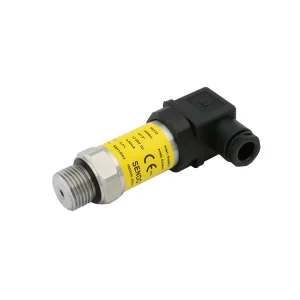
Stainless steel pressure sensors are appreciated for their robust outer body. Their material supports safe use, stable performance, and extended service life for many industrial systems.
1) They Resist Corrosion in Many Industrial Settings.
Sensor parts can be affected over time by moisture and process fluids. Stainless steel is more resistant to rust than are many common metals. This makes it suitable for water systems, pumps, and outdoor equipment.
The protection is based on the type of steel. Corrosion risk is also related to the chemical type and temperature.
2) They Withstand High Pressure and Repeated Pressure Changes.
Pressure levels change frequently in industrial systems. Pumps and valves can also cause sudden pressure surges. However, if the sensor is properly designed, stainless steel components can withstand these stresses.
To be sure, buyers should verify the rated pressure and overpressure limit. The material does not set these values.
3) They Provide Greater Shock and Vibration Protection.
Constant movement can be created when heavy machines are in use. Sharp impacts can occur on mobile equipment as well. A strong steel housing well protects the sensing parts and electronics.
This is a useful feature on hydraulic systems, compressors, engines, and factory equipment. However, proper installation remains crucial.
4) They Help to Minimize Leaks in Fully Welded Designs.
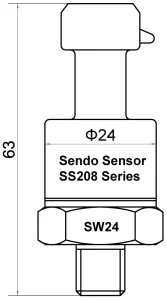
A fully welded construction can minimize the number of pressure-path joints and seals. It also allows the process medium to be separated from the measurement parts. The actual construction, however, should be verified from the product data sheet. [2]
Not all models are totally welded. This information should always be verified in the product data sheet.
5) They Work Great at High and Low Temperatures.
Much of the strength of stainless steel is retained under both hot and cold conditions. This enables it to be used in refrigeration units, boilers, and heated process lines.
The maximum temperature, however, depends on the complete sensor. Lower limits may apply to seals, cables, and electronics as compared to the steel body of the tank.
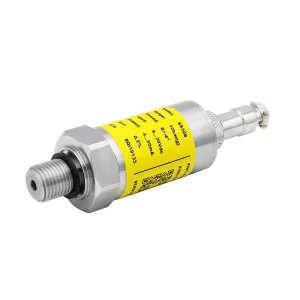
6) They Help to Make Cleaning Easier in Process Industries.
Smooth stainless steel surfaces are more convenient to clean than rough or coated surfaces. This is beneficial for food, beverage, and other process plants.
Thick or solid-filled media can block the pressure port, which can be prevented by installing flush diaphragms. They also help in making the sensing area clean [2].
7) They Can Provide a Longer Working Life.
Early sensor failure is often due to corrosion and/or physical damage. These risks can be reduced with stainless steel construction in the appropriate environment.
Increased service life can help to lower replacement work and machine downtime. Even then, it is subject to proper selection, installation, and maintenance.
Where Are Stainless Steel Pressure Sensors Commonly Used?
Stainless steel pressure sensors are used in many industrial systems. They are strong and moisture-resistant, so they are perfect for tough work sites. The optimum sensor is still medium-, pressure-, and temperature-dependent.
1) Hydraulic Systems and Mobile Machinery
Hydraulic equipment is often operated under high pressure. It can also be subjected to vibrations, dust, oil, and pressure perturbations. Typical uses of stainless steel sensors include loaders, tractors, lifts, and construction machines. They are employed for checking pumps, cylinders, and hydraulic lines. The housing can also provide strong protection to the sensor when the machine is moving normally.
2) Pumps, Compressors, and Pneumatic Equipment
Steady pressure control is necessary for pumps and compressors. A pressure sensor can be used to monitor low flow, overload and blocked lines. They are also used in air systems and industrial gas equipment.
3) Water and Wastewater Treatment Systems
Pressure sensors are used in tanks, pipes, filters, and pumping stations in water plants. These areas can be wet for long periods.
In appropriate water conditions, stainless steel can reduce corrosion. Tank level measurement can also be achieved by using submersible models. The cable and seal should be an immersed design.
4) Chemical Processing and Oil and Gas Plants
For chemical plants, a sensor must be capable of coping with challenging process fluids. Sensors can also be exposed to heat, pressure, outdoor weather conditions, and so on, in the oil and gas systems.
Many of these uses can be made out of stainless steel. Each chemical, however, needs to be verified for material compatibility. In explosive areas, special approval may also be required.
5) Food and Beverage Production
The grades 304 and 316 are commonly used in hygienic applications. But the chosen material should be safe and non-reactive under the working conditions. Certified sanitary equipment may also have to be recorded in the material. [4]
6) HVAC and Refrigeration Systems
Pressure sensors are used in HVAC systems. These systems can be exposed to moisture, vibration, and fluctuating temperatures.
Stainless steel sensors can perform well in such an environment. The selected model must also be compatible with the refrigerant and operating pressure.
How Does Stainless Steel Help Protect Sensor Performance?
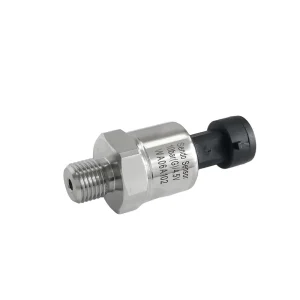
The shape of a pressure sensor needs to remain unchanged due to varying process conditions. Damage to the housing or diaphragm may affect the reading. It may also cause leakage and premature failure.
The body of the main sensor parts is supported with stainless steel. Assists the process joint in coping with strain and normal equipment motion. It also protects the internal electronics from impact and moisture.
An important part is the diaphragm. It travels, following pressure changes. A good-quality stainless steel diaphragm can withstand repeated pressure changes and maintain its shape.
But stainless steel by itself can’t make anything more accurate. The sensing element, calibration, and temperature control are also factors in sensor accuracy. Installation quality is also a factor.
The sensor has to match the process to get stable results. The pressure range as well as the temperature and medium should all match the selected model.
What Is the Difference Between 304 and 316L Stainless Steel?
Both 304 and 316L stainless steel are used in industrial equipment. However, they are not as corrosion-resistant.
The “L” in 316L refers to its low carbon content. This lower level minimizes risk of corrosion around the welded zones. This is why 316L is typically employed in welded industrial instruments. [3]
But the sanitary suitability of stainless steel is not demonstrated with the grade alone. Surface design, material records, sealing, and cleaning are also rules that apply to food-processing equipment. [4]
Grade 304 is used for general industrial applications. It performs well in clean water, dry areas, and mild process conditions. It is also strong and can be easily shaped.
316L has the addition of molybdenum. This enhances its ability to withstand several chemicals and salt conditions. Low carbon also improves weld performance. It can help mitigate the corrosion risk in the vicinity of welds.
This is not to say 316L is the best choice for all process fluids. It is still susceptible to damage by strong acids and high chloride levels. The result will also depend on the temperature and chemical strength.
The buyer shall confirm the steel grade of the diaphragm and the process connection. The final selection should match the medium and working conditions.
304 vs 316L Stainless Steel
| Faktor | 304 Stainless Steel | 316L Stainless Steel |
| Common use | General industrial systems | Chemical, marine, and hygienic systems |
| Korrosionsbeständigkeit | Suitable for mild conditions | Better resistance to salt and some chemicals |
| Welded designs | Good | Lower risk of corrosion near welds |
| Kosten | Usually lower | Usually higher |
Are Fully Welded Stainless Steel Pressure Sensors a Better Choice?
A fully welded sensor contains fewer seals in its pressure path. This can lessen the number of potential leak sites. It can also help prevent contact between the process media and the sensing electronics.
Useful in oil, refrigerant, water, and some chemical applications. It can also function better in environments that experience frequent pressure fluctuations. Welded joints can provide the sensor with a strong, compact structure.
But sometimes a fully welded design isn’t necessary. Some applications are well-suited to a sealed sensor. The final selection will be based upon medium, pressure, and temperature.
The Buyer should consult the product data sheet before purchase. This should confirm the wetted materials and seal design. It should also contain the pressure and temperature limits.
How Do Stainless Steel and Ceramic Pressure Sensors Compare?
Both stainless steel and ceramic sensors can be used to give a reliable pressure reading. But they are appropriate for different working conditions.
Stainless steel sensors are used in high-pressure and heavy machine applications. They possess a robust metal construction that can resist shocks and repetitive pressure changes. The fully welded variants can also eliminate the need for internal seals.
Ceramic sensors can withstand a wide variety of chemicals. They have a non-corroded sensing surface. This can render them useful in water treatment, chemical systems, and low-pressure applications.
There is also a difference in the two designs when it comes to handling pressure spikes. While ceramic parts are hard, they can be even more brittle than steel. Stainless steel diaphragms may be more suitable in situations where impacts and machine movements occur.
Price can also be a factor in the selection. For many applications, ceramic sensors can provide a good value. Stainless steel models might be more expensive because of the materials used.
Neither is the best choice for all systems. The choice depends on the medium, pressure, temperature, and working environment.
What Should You Check Before Choosing a Stainless Steel Pressure Sensor?
Not all sensors are created equal for meeting the requirements of all processes, even stainless steel bodies. Before making a decision, buyers must consider the sensor’s entire design.
1) Check the Process Medium and All Wetted Parts
Always begin with the liquid/gas being measured. Its temperature can impact material suitability.
Test all parts that come into contact with the medium. Housing material should not be the only factor used to determine compatibility.
2) Confirm the Pressure Range and Overpressure Limit
Select a range for system pressure. If the range is too high, it could decrease the amount of detail that can be read.
Also refer to the overpressure limit. This indicates the additional pressure that the sensor can withstand.
3) Match the Output Signal to the Control System
The sensor output should be compatible with the current control system. Examples are 4-20 mA and voltage signals.
Another aspect buyers should consider is the power supply and how it is wired. The equipment may need to be increased if the wrong output is selected.
4) Check Ingress, Vibration, and Safety Ratings
An IP rating indicates the enclosure’s resistance to water and dust. These protection levels are classified using the system from IEC 60529. IP rating does not provide evidence of chemical, pressure, or corrosion resistance. [6]
Details to Confirm on the Data Sheet
- Check the material used for every wetted part.
- Confirm the normal pressure range.
- Review the overpressure limit.
- Check the operating temperature limits.
- Match the output signal to the control system.
- Review the IP and safety ratings.
What Common Mistakes Should Buyers Avoid?
A frequent error is selecting a sensor for its steel casing. The housing can be made of stainless steel, while the seals or diaphragm can be of another material. All wetted parts should be compatible with the process media.
A second common error is choosing the wrong pressure range. A range that is too low can result in damage. A range that’s too high can reduce the amount of detail that can be read.
Buyers also can overlook pressure surges. This can cause short periods of high pressure, as can pumps and valves. These spikes can be higher than what’s normal for the device.
It should also not be assumed that an IP rating indicates chemical resistance. IP rating is only a measure of dust and water protection.
Some buyers think that stainless steel is always an advantage for accuracy. The sensing element, calibration, and temperature control influence accuracy.
The most conservative approach is to consult the complete data sheet. The sensor should be matched to the medium, pressure, temperature, output, and working area.
How Can Stainless Steel Pressure Sensors Lower Maintenance Costs?
Sensor failure can halt a machine or impede a process. It can also result in additional replacement and labor costs.
In harsh applications, stainless steel sensors can minimize these issues. They have a solid housing that can withstand impact, moisture, and frequent machine movement. The diaphragm and process connection can also be spared from corrosion damage, thanks to higher corrosion resistance.
Fully welded construction can further minimize the chances of leaks. Fewer internal seals also could result in fewer parts that can fail.
These benefits can help to extend the service life. They can also help to minimize unscheduled downtime and frequent sensor replacement.
But it is important to make the right selection to save costs. Even if the medium and pressure range are not suitable, a sensor will fail early anyway. Some regular checks and proper installation are important.
FAQs:
1) Are Stainless Steel Pressure Sensors Corrosion-Proof?
No. Stainless steel is corrosion-resistant, but not corrosion-proof. However, the metal can still be destroyed by strong acids, chlorides, and high temperatures.
2) Is 316L Stainless Steel Better Than 304?
In many cases, 316L provides superior resistance to chemicals and salt conditions. But 304 can be used for light industry applications. Depending on the process media, the correct grade should be used.
3) Can Stainless Steel Sensors Measure Chemicals?
Yes, chemical pressure can be measured with some of the models. The buyer must verify all wetted materials. Compatibility is influenced by chemical type, strength, and temperature.
4) Does Stainless Steel Improve Sensor Accuracy?
Not by itself. The accuracy is related to the sensing element and temperature control. One of the primary uses of stainless steel is to offer strength and protection.
5) Are These Sensors Suitable for Food Processing?
They may be appropriate for food and beverage systems. The proper surface finish, seal, and process connection are also required for hygienic use.
6) Can Stainless Steel Pressure Sensors Be Used Outdoors?
Yes, provided the model is enclosed with the appropriate enclosure rating. The cable, connector, and seal should also be weatherproof, dustproof, and temperature-resistant.
7) How Long Does a Stainless Steel Pressure Sensor Last?
Service life is not specified. It depends on the media, pressure, temperature, vibration, and maintenance. Choosing the right sensor can help prolong its life.
Final Thoughts!
In demanding industrial systems, there is a definite value in stainless steel pressure sensors. They are corrosion-resistant and can withstand pressure fluctuations, safeguarding critical sensor components. In certain applications, the fully welded models can also minimize the leak points.
But this should not be the final decision, based on materials alone. The sensor has to be compatible with the process medium, pressure range, temperature, and connection type. All wetted parts and required safety ratings should also be inspected by the buyer.
The right sensor can help ensure accurate readings and reduced maintenance requirements. Product checking is still the most critical step before installation.
Discover Sendo Sensor’s stainless steel pressure sensors. Call us, and we will help you identify a sensor that will work in your environment.
References:
1) British Stainless Steel Association (BSSA). Introduction to Corrosion Resistance of Stainless Steels.
2) National Institute of Standards and Technology (NIST). Pressure Measurement, Sensors, and Related Technologies – Technical Publications and Research.
3) Grubb, J. F., DeBold, T., & Fritz, J. D. (2005). Corrosion of Wrought Stainless Steels. ASM Handbook, Volume 13B: Corrosion: Materials. ASM International.
4) European Hygienic Engineering & Design Group (EHEDG). Guidelines for Hygienic Design of Equipment.
5) Fraden, J. (2016). Handbook of Modern Sensors: Physics, Designs, and Applications. 5th Edition. Springer.
6) International Electrotechnical Commission (IEC). IEC 60529: Degrees of Protection Provided by Enclosures (IP Code).