

Pressure sensors detect the force exerted by a gas or liquid against an object. They keep machines from operating outside safe limits. A popular type is the piezoresistive pressure sensor. It measures pressure based on a change in electrical resistance.
A thin piece of material within the sensor called a diaphragm. The diaphragm curves when pressure is applied. This alters the resistance of a small sensing element. The sensor then converts this change into an electrical signal [2] [3].
A piezoresistive pressure sensor is a technology used to measure pressure. It is explained below in terms of its working, construction, and applications.
Key Highlights:
- Piezoresistive pressure sensors rely on measuring electrical resistance.
- Silicon and metal are the most commonly used sensing materials.
- These sensors are commonly used in vehicles and industrial machinery.
- Proper calibration is important, as their readings can vary with temperature.
How Piezoresistive Pressure Sensors Work
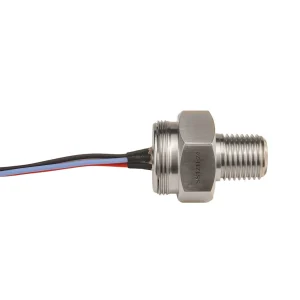
Piezoresistive pressure sensors rely on changes in electrical resistance. The sensing material changes shape when pressure or mechanical stress acts on it. This results in a change in its electrical resistance [2][3].
A thin diaphragm in the sensor flexes when pressure acts on it. Small sensing elements sit on its surface. These elements stretch or compress as the diaphragm bends. This causes their electrical resistance to change.
Two factors influence the magnitude of this change: the material used. Silicon is common because its electrical resistance changes significantly under stress. This makes it suitable for measuring small pressure changes [3][4].
Another significant term is the gauge factor. It measures how much a material’s resistance changes when the material bends or stretches. The higher the gauge factor, the smaller the pressure change the sensor can detect.
Types of Pressure Measured by Piezoresistive Sensors
There are three basic ways to measure pressure using piezoresistive pressure sensors. Different pressures are referenced for each type.
1) Absolute Pressure: pressure relative to a vacuum in a sealed container. It’s commonly employed for air pressure and altitude measurement.
2) Gauge Pressure: Measures pressure against the surrounding air pressure. These sensors are commonly used in tire pressure monitoring systems and hydraulic systems.
3) Differential Pressure: This is the difference in pressure between two points. It is commonly used to test airflow and the working performance of the filte.
The type of sensor used is dependent on the system and the pressure to measure [1][2].
Structure and Materials Used in Piezoresistive Pressure Sensors
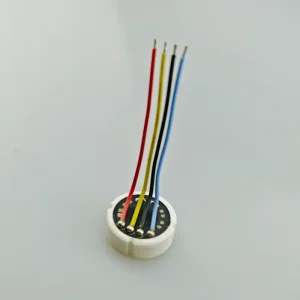
There are two types of strain gauges for measuring pressure: Silicon and metal. They vary, however, in sensitivity and their response to temperature changes.
1) Main Parts of a Piezoresistive Pressure Sensor
The key component of a piezoresistive pressure sensor is a thin diaphragm. When pressure acts on it, the diaphragm bends. Manufacturers typically use silicon or metal to make it.
Small sensing elements sit on the diaphragm. They detect resistance changes as the diaphragm moves. Electrical connections then carry the signal to an external circuit [2][4].
Many modern sensors use MEMS technology. It allows manufacturers to integrate very small sensing parts onto a silicon chip. As a result, these sensors take up less space and fit easily into small devices [3][5].
2) Silicon vs. Metal Strain Gauges
How a sensor responds to pressure depends on the material that makes up the sensor. The two most common choices are silicon and metal. Both can sense pressure changes; however, their responses to stress and temperature are different.
| Feature | Silicon Strain Gauges | Metal Strain Gauges |
| Material | Silicon | Metal foil or wire |
| Sensitivity | Usually higher | Usually lower |
| Construction | Often built into a silicon chip | Often attached to a metal diaphragm |
| Temperature Effects | More sensitive to temperature changes | Generally more stable |
| Common Use | MEMS pressure sensors | Industrial pressure sensors |
Silicon gauges can sense extremely small pressure changes. This renders them suitable for small-size sensors. Industrial systems may use metal gauges. They are also effective in harsh environments [2][3][4].
How Pressure Is Converted Into an Electrical Signal
More than just a pressure detector, a piezoresistive sensor can measure pressure. It also converts changes in pressure into a signal that a device can read.
1) Resistance Changes and Wheatstone Bridge Circuits
The diaphragm bends when pressure acts on the sensor. This puts stress on the sensing elements. Then, their electrical resistance varies. The resistance of some elements increases, while others decrease [2][3].**
The most common piezoresistive pressure sensor is the Wheatstone bridge. This circuit has 4 resistors. It converts small changes in resistance into a voltage change.
If no pressure is applied, the bridge circuit is balanced. The resistance of the sensing elements changes as pressure increases or decreases.
This throws the bridge out of balance and produces an output voltage. As pressure on the sensor increases or decreases, the voltage changes [2][4].
2) Signal Conditioning
Voltage output of the bridge may be very small. It needs enhance before a device can read it. An amplifier does this. Additionally, other circuits can help reduce unwanted electrical noise.
The sensor then transmits the enhanced signal to a display or control unit. This enables the system to display the pressure or use it to operate a machine.
3) Calibration and Temperature Compensation
All sensors should be calibrated before use. This is done by comparing them with known pressures. The results enable correlation of the output to the correct pressure [6].
However, temperature may also impact sensor readings. When pressure remains constant, resistance may change with temperature. This error can be corrected by temperature compensation. It maintains accurate readings over a wide temperature range [5][6].
Common Applications of Piezoresistive Pressure Sensors
Piezoresistive Pressure Sensors are found in a variety of equipment. They help monitor pressure and warn users if readings exceed safe limits.
Automotive: They measure oil or fuel pressure in an engine. They also monitor the air pressure in the engine.
Industrial Equipment: They monitor pressure in factory hydraulic systems. They help keep machines within safe limits.
Medical Devices: These sensors check a patient’s blood pressure in a blood pressure monitor. They also work in some breathing machines.
HVAC Systems: These sensors monitor air pressure inside heating and cooling systems. They help maintain airflow at the desired level.
Aerospace: Aircraft use pressure sensors to monitor air and fuel systems. Pilots and control systems use these readings to track changes during flight.
These sensors are also useful for small electronic devices because of their small size. Since they can measure very slight changes in pressure, they are suitable for many modern systems [1][2][3].
Advantages and Limitations of Piezoresistive Pressure Sensors

Piezoresistive pressure sensors have several advantages. They also have limitations that can restrict performance under certain conditions.
1) Advantages of Piezoresistive Pressure Sensors
These sensors can measure minute changes in pressure. They are also easy to design and can be used with various types of equipment.
Their biggest advantage is their sensitivity. They can accurately measure small pressure changes. Also conveniently small enough to fit into small devices. They can measure both low and high pressure, based on their design [2][3].
2) Limitations of Piezoresistive Pressure Sensors
Environment around these sensors can affect their readings. This may cause errors in the pressure readings.
One such concern is temperature. The resistance of the sensing elements can change with temperature. This can impact the output without a change in pressure. The readout of some sensors also drifts slightly over time [5].
3) What to Consider When Choosing a Sensor
Sensor needs to be appropriate for the system. The correct type should be selected; otherwise, erroneous readings may result.
First, check the pressure range. A high-pressure sensor will not necessarily be accurate when measuring very low pressures. Also check the temperature range the sensor is capable of operating in.
The power requirement is also worth considering. Some sensors require additional circuits to provide clear readings. The selection of the right type depends on the operating pressure range and the equipment’s working conditions [2][4][5].
FAQs:
1) How Does a Piezoresistive Pressure Sensor Work?
Piezoresistive pressure sensor detects changes in electrical resistance. The sensing elements change resistance when pressure flexes the diaphragm. It is then converted into a voltage signal by a circuit [2][3].
2) What Is the Role of a Wheatstone Bridge in a Pressure Sensor?
A Wheatstone bridge is used to measure a small variation in resistance. It turns these changes into a voltage signal. This allows the sensor to measure the pressure applied to its diaphragm [2][4].
3) What Is the Difference Between Silicon and Metal Piezoresistive Sensors?
Silicon sensors are more sensitive to pressure changes. They are commonly employed in small MEMS devices. Metal strain gauges provide lower sensitivity but have higher temperature stability. They are widely used in industrial pressure sensors [2][3].
Final Thoughts!
Piezoresistive pressure sensors convert the pressure into an electrical signal. They measure the force of gases or liquids by their changes in resistance. They are sensitive and small enough to be used in several systems.
The right sensor needs to be appropriate to the working conditions. If selected and calibrated properly, pressure readings will remain accurate over time.
Looking for a reliable Piezoresistive Pressure Transducer? Contact Sendo Sensor to find the right pressure sensing solution.
References:
[1] Avnet Abacus. “Piezoresistive Pressure Sensors.“
[2] Fiorillo AS, Critello CD, Pullano SA. “Theory, Technology and Applications of Piezoresistive Sensors: A Review.“
[3] Barlian AA, Park WT, Mallon JR, Rastegar AJ, Pruitt BL. “Review: Semiconductor Piezoresistance for Microsystems.“
[4] Kumar S, Pant BD. “Design Principles and Considerations for the ‘Ideal’ Silicon Piezoresistive Pressure Sensor: A Focused Review.“
[5] Liu Y, Jiang X, Yang H, Qin H, Wang W. “Structural Engineering in Piezoresistive Micropressure Sensors: A Focused Review.“
[6] Liu Y, Wang H, Zhao W, Qin H, Fang X. “Thermal-Performance Instability in Piezoresistive Sensors: Inducement and Improvement.“
[7] Pereira JD. “Pressure Sensors: Working Principles of Static and Dynamic Calibration.“