

Accurate pressure measurements are essential in almost every industry. But conditions vary from one application to another. For example, the food and beverage industry requires accurate pressure measurements along with hygiene. These conditions create greater challenges and can’t be met with conventional pressure sensors.
But don’t worry; other options are available, such as Flush pressure sensors. Today we will dive deep into flush pressure sensors, understand how they work, and explore their benefits and applications.
What are Flush Pressure Sensors?

Flush pressure sensors are specialized tools that ensure accurate pressure measurements while decreasing the chances of contamination. They interact with a variety of fluids and still provide accurate measurements.
Flush pressure sensors are ideal for viscous and solid-containing media.
How Flush Pressure Sensors Work
Flush pressure sensors operate like conventional pressure sensors, detecting pressure changes via diaphragm deformation. This deformation provides accurate measurements.
Here is how the measurement process works.
- Process pressure acts directly on the sensing diaphragm.
- The diaphragm responds to pressure changes.
- The sensing element detects the resulting mechanical change.
- Internal electronics process the measurement.
- The sensor generates an electrical output for monitoring or control.
|
Feature
|
مستشعر ضغط التدفق
|
Conventional Pressure Sensor
|
| Diaphragm position | Flush with process connection | Usually recessed |
| Pressure port | Minimized or eliminated | Usually present |
| Viscous media | Highly suitable | Greater clogging risk |
| Solids-containing media | Suitable with correct selection | Can cause blockage |
| Material buildup | Reduced | More likely |
| Cleaning | Generally easier | Can be more difficult |
| Typical applications | Slurries, pastes, adhesives, food products | Clean liquids and gases |
Why Viscous Media Require Flush Pressure Sensors
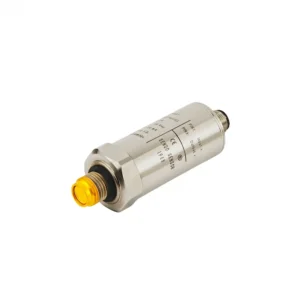
Viscous media require flush-mounted pressure sensors for the following reasons.
Prevent Clogging
Clogging is a major issue for pressure sensors. Viscous media, in particular, pose this challenge because they accumulate in pores and cause blockages. But flush pressure sensors reduce the risk of clogging and improve fluid flow because they have minimal pores and cavities.
Here are a few typical benefits of flush-pressure sensors under such conditions.
- Lower risk of pressure-port blockage.
- Reduced material accumulation.
- More consistent pressure transmission.
- Faster response to pressure changes.
- Less frequent cleaning.
- Lower maintenance requirements.
Measuring Sticky and Paste-Like Materials
Sticky, paste-like materials adhere to the pores and recesses of the pressure sensors. Flush pressure sensors are ideal because they have no cavities and meet hygiene requirements.
تشمل التطبيقات النموذجية ما يلي:
- Adhesive production.
- Sealant manufacturing.
- Cream and lotion processing.
- Syrup production.
- Resin processing.
- Gel manufacturing.
- Thick oils and lubricants.
- Printing inks and coatings.
Flush Pressure Sensors for Solids-Containing Media
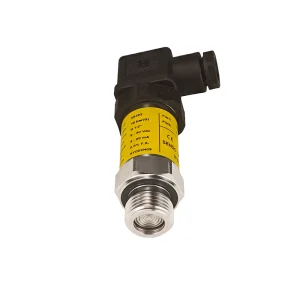
Flush pressure sensors for solid-containing media are ideal for the following reasons.
Measuring Slurries
Slurries contain suspended solid particles. They can be highly abrasive and may contain a significant concentration of solids.
Flush pressure sensors can be used in:
- Mining slurry systems.
- Mineral processing.
- Chemical slurry applications.
- Cement processing.
- Wastewater sludge systems.
- Industrial slurry pipelines
Handling Fibers and Suspended Particles
Fibrous media can be particularly challenging, as fibers can accumulate around the opening. Pulp and paper production involves accurate measurements with flush pressure sensors.
تشمل المزايا ما يلي:
- Reduced fiber accumulation.
- Lower probability of pressure-port blockage.
- More stable pressure measurement.
- Easier cleaning.
- Reduced maintenance requirements
Applications of Flush Pressure Sensors

Flush pressure sensors have several critical applications, as discussed below.
Food and Beverage Processing
The food and beverage industry involves a variety of fluids with varying viscosities. Moreover, the food and beverage industry requires hygienic, clean measurement processes.
Flush pressure sensors offer fewer pores and better cleaning performance. Common applications include:
- Dairy processing.
- Sauce and dressing production.
- Syrup processing.
- Chocolate manufacturing.
- Cream processing.
- Food mixing systems.
- Filling and dosing equipment
Pharmaceutical Processing
Pharmaceutical processing involves a variety of fluid states, from thick to thin, and requires accurate pressure measurements for strict hygienic production.
Flush pressure sensors are a crucial means of measuring pressure in the pharmaceutical industry. They are used in:
- Pharmaceutical mixing vessels.
- Cream and ointment production.
- Formulation systems.
- Filling machines.
- Dosing equipment.
- Process tanks.
Chemical Processing
The chemical processing industry also has a variety of chemicals. Flush pressure sensors resist unexpected changes and improve overall pressure measurements during chemical processing.
It helps in the following applications:
- Chemical reactors.
- صهاريج التخزين.
- Mixing systems.
- Dosing equipment.
- Chemical transfer lines.
- Processing vessels.
Wastewater and Sludge Processing
Wastewater and sludge processing require accurate pressure measurements. The applications of the flush pressure sensors include:
- Sludge tanks.
- Wastewater pipelines.
- Pumping systems.
- Treatment vessels.
- Filtration equipment.
- Slurry-handling systems
Key Benefits of Flush Pressure Sensors
Flush pressure sensors offer several benefits, as discussed below.
Reduced Clogging
Flush pressure sensors have fewer recesses, minimizing the risk of clogging. Food is less likely to get trapped in the pores.
Here are a few typical benefits.
- Lower risk of blockage.
- Reduced material buildup.
- More reliable pressure transmission.
- Fewer cleaning interruptions.
- Improved sensor availability.
Easier Cleaning
Cleaning is easier due to easy access to the surface, reduced food or processed particles, and an optimal system.
They have the following benefits:
- Fewer dead spaces.
- Reduced residue accumulation.
- Easier access to the process-facing surface.
- Simpler routine cleaning.
- Better suitability for hygienic processes
Improved Measurement Reliability
Fewer opportunities for contamination and improved cleaning support overall reliability and offer the following benefits.
- Stable pressure readings.
- Better response to pressure changes.
- Improved process monitoring.
- More reliable automated control.
- Reduced measurement interruptions
Lower Maintenance Requirements
Maintenance depends on contamination and cleaning. With fewer spaces and a lower risk of contamination, cleaning is even easier. It has the following benefits.
- Fewer production interruptions.
- Reduced cleaning time.
- Lower risk of sensor malfunction.
- Longer service intervals.
- Lower maintenance costs.
الخاتمة
Flush pressure sensors can be vital across various industrial sectors. From the food industry to the pharmaceutical industry, they minimize contamination risk, improve hygiene, and ensure accurate pressure readings.
If you are looking for premium-grade flush pressure sensors, look no further. Sendo-sensor offers premium flush pressure sensors that deliver high-quality measurements and improve overall application reliability. Contact our experts regarding the pressure sensors right away!