

Pressure can be different from one location to another in a system. It is critical in many machines to measure this change. It helps identify issues that will impact performance.
A Differential pressure sensor measures the difference in pressure between two points. It then displays the difference. This enables users to monitor changes in air or liquid flow.
The question remains: how does this sensor work? Let’s take a peek at its basic design and working principle.
Key Highlights:
- Pressure difference sensors measure the difference between two pressures.
- A diaphragm is bent due to the difference between the two pressure readings.
- Piezoresistive elements are used to sense changes in electrical resistance.
- The right sensor depends on the pressure range and working conditions.
Understanding Differential Pressure Measurement
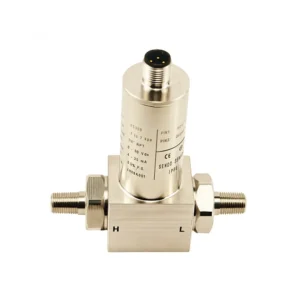
The difference between two pressure readings is called Differential Pressure. It shows the pressure difference between two points. The sensor reads both values and compares them.
For instance, one side of a filter could have higher air pressure than the other. It may be lower on the other side. The difference can indicate if the filter is clogged.
1) Differential Pressure vs. Absolute and Gauge Pressure
Absolute pressure is the pressure measured with respect to a perfect vacuum. Gauge pressure is the difference between the measured pressure and the atmospheric pressure. Differential pressure is the difference between two pressure readings.
All three types have different functions. Absolute pressure indicates the overall pressure. Gauge pressure indicates the pressure relative to the surrounding air. The differential pressure indicates the pressure difference between two locations.
2) The Role of Two Pressure Ports
A differential pressure sensor has two pressure ports: one is labeled high pressure (HP). The other is labeled low pressure (LP).
The higher pressure is in the HP port. Lower pressure is at the LP port. The sensor compares both readings and determines the pressure difference.
The simple equation:
Differential Pressure = P1 − P2
Here, P1 and P2 are the two pressure measurements. This will reveal the pressure difference between them.
How Differential Pressure Sensors Work
A Differential pressure sensor measures the difference between two pressures. Both pressures act on a thin part called a diaphragm. The diaphragm moves due to the pressure difference. The sensor measures this movement and converts it into an electrical signal.
1) Pressure Difference and Diaphragm Deflection
The diaphragm is located between the two pressure ports. High pressure is applied on one side. Low pressure is applied to the other side.
The diaphragm curves when the pressures are unequal. The bigger the pressure difference, the more the movement. The movement may vary depending on the sensor design.
2) Piezoresistive Sensing and Electrical Resistance Changes
Piezoresistive elements are often used in differential pressure sensors. Small components in which the electrical resistance varies with bending or stretching. The elements are fixed on the diaphragm. As the diaphragm moves, their resistance changes.
3) Wheatstone Bridge Circuits
A Wheatstone bridge is used to measure small changes in resistance. It has 4 resistors in the circuit. These piezoresistive elements are part of this circuit.
Resistance also varies with pressure. This affects the bridge’s equilibrium. The circuit generates a small voltage in turn. This voltage is equivalent to the difference in pressure.
4) Signal Amplification and Temperature Compensation
The voltage output of the bridge may be quite low. An amplifier is a device that increases the voltage. This makes it easier for other devices to read the signal.
Temperature can also affect the sensor output. It is possible for the resistance of its sensing elements to change with temperature. This error can be minimized through temperature compensation. This helps to stabilize the pressure readings.
Key Components of Sensores de pressão diferencial
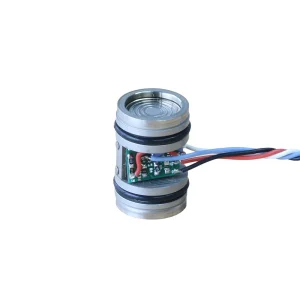
There are several important components in a differential pressure sensor. Each component has a clear purpose. The pressure ports are the ones that are read.
The diaphragm is sensitive to the pressure difference. This generates an electrical signal through internal circuits.
1) Sensing Diaphragm and Pressure Ports
A thin, flexible part within the sensor is the diaphragm. It is located between the two pressure ports. One port is a high-pressure port. Low pressure is applied to the other.
The diaphragm will bend due to the pressure difference. This motion enables the sensor to sense the pressure changes. The sensor then uses this change as its output.
2) MEMS Technology and Piezoresistive Sensing Elements
MEMS is an acronym for microelectromechanical systems. It enables engineers to create extremely small mechanical and electrical components.
On the sensing diaphragm, piezoresistive elements are located. They sense minute movements by changes in resistance. Because of MEMS technology, these parts are compact.
3) Integrated Electronics and Signal Conditioning
Modern sensors often have built-in electronic circuits. These circuits are used to process the signals from the sensing elements. They are also used to decrease unwanted noise.
There are some temperature-compensated sensors. This reduces error due to temperature changes. This results in a more stable pressure measurement.
4) Analog and Digital Output Interfaces
Differential pressure sensors can be analog or digital output. Voltage or current signals are common with analog sensors. 4–20 mA is a typical industrial output.
Digital sensors transmit readings in a data format. They can interface with control boards and other electronic systems. The output varies depending on the reader that reads the sensor.
Common Applications of Differential Pressure Sensors
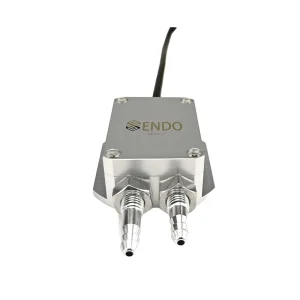
Differential pressure sensors in a variety of industries have many different applications. They track pressure changes in pipes and other systems. They can also be used to identify faults based on their readings.
1) Industrial Process Control and Flow Monitoring
Differential pressure sensors are used to monitor flows in factories. They measure the pressure drop across an orifice plate. This reading will be used to determine the flow rate.
They are also utilized in pipelines and pumps. A sudden change in pressure may indicate a blockage or leak. This will help employees spot issues more quickly.
2) HVAC Systems
These sensors are used in heating and cooling systems to measure air pressure. They can measure the pressure difference across an air filter. If the pressure drop is large, the filter could be dirty or blocked.
3) Medical Equipment
Differential pressure sensors are used to measure airflow in medical devices. They are used in ventilators to measure breathing pressure. They can also be used to determine airflow in certain respiratory devices.
4) Liquid Level Measurement in Closed Tanks
Differential Pressure sensors are used to measure liquid level in closed tanks. The bottom of the tank is connected to the high-pressure port. The low-pressure port is connected to the space above the liquid.
The sensor reads the two pressures. This is used to locate the level of the liquid, even when the tank is under pressure.
5) Oil and Gas
These sensors are utilized to measure pressure in oil and gas systems, throughout pipes and filters. The water treatment plant uses them to monitor pressure variations within the filter systems. They can also be used to monitor pressure in pumps and pipes for fire protection systems.
Selecting the Right Differential Pressure Sensor
Selecting the Sensor is important to ensure accurate readings. There are different pressure requirements for each application. Review several important considerations prior to choosing a sensor.
1) Pressure Range
Check the pressure range validity before buying a sensor. It should match the pressure difference in your system. The sensor can be configured for a range that gives poor readings.
Accuracy is also important. It shows the error between the pressure indicated and the actual pressure. Sensitivity is the sensor’s sensitivity to small changes.
2) Media Compatibility
Look at the sensor’s measurement parameters. There are other sensors for air. Others can deal with liquids and gases. The material(s) of the sensor(s) must be compatible with the fluid and/or gas in the system.
3) Output Signals
See if the sensor has an output type. Certain models operate with voltage signals. Some opt for 4-20mA or digital output. Be sure the output is compatible with your control system. This will enable the sensor to send readings without further setup adjustments.
4) Environmental Resistance
A good sensor should be effective in the long run. See how long it lasts and how it’s constructed. It must also resist vibration and pressure changes. Regular checks can help ensure accurate readings. Select a sensor that is easy to install and maintain.
FAQs:
1) What Is the Main Working Principle of a Differential Pressure Sensor?
A differential pressure sensor measures the difference between the pressure at two points. It can distinguish between them. The diaphragm will shift when the two pressures are not equal. The sensor converts this motion into an electrical signal.
2) What Is the Difference Between Differential and Absolute Pressure Sensors?
A differential pressure sensor is used to compare two pressure readings. An absolute pressure sensor measures pressure relative to a perfect vacuum. They both use different reference points.
3) Can Differential Pressure Sensors Measure Liquid and Gas Flow?
Yes. They can be used to measure the flow of liquids and gases. The sensor measures the pressure differential that occurs across a flow element. This reading helps determine the flow rate.
4) Can Differential Pressure Sensors Measure Liquid Levels in Closed Tanks?
Yes. These sensors can measure liquid levels in closed tanks. One port is located at the bottom of the tank. The other port is located above the liquid. The sensor determines the liquid level based on the pressure difference.
Final Thoughts!
Differential pressure sensors are used for measuring pressure changes between two points. They are significant in a variety of industrial systems. For better pressure monitoring and control, the right sensor is required.
It is crucial to select a proper model. Always refer to the pressure range and working conditions before making a selection.
Searching for pressure sensing solutions? Check Sendo Sensor’s Sensores de pressão diferencial to identify the right sensor for the job. Call us to learn about the latest solutions.
References:
- Industrial sensor technologies – Liu J, Yuan C, Matias L, Bowen C, Dhokia V, Pan M, Roscow J. (2024). Sensor Technologies for Hydraulic Valve and System Performance Monitoring: Challenges and Perspectives.
- MEMS pressure sensor design – Han X, Huang M, Wu Z, et al. (2023). Advances in High-Performance MEMS Pressure Sensors: Design, Fabrication, and Packaging.
- Differential pressure sensor construction – Song JW, Lee JS, An JE, Park CG. (2015). Design of a MEMS Piezoresistive Differential Pressure Sensor With Small Thermal Hysteresis for Air Data Modules.
- Differential pressure and flow measurement – Vemulapalli S, Venkata SK. (2022). Parametric Analysis of Orifice Plates on Measurement of Flow: A Review.
- Medical and respiratory applications – Holder-Pearson L, Chase JG. (2021). Physiologic-Range Flow and Pressure Sensor for Respiratory Systems.
- Industry technical guide – Avnet Abacus – Differential Pressure Sensors