

Pressure Sensors play a crucial role in pressure measurement under different conditions. However, they respond in two output forms. One is the 4-20mA current output, and another is 0-10V voltage output. Both are as important as the pressure selection, as they can alter results and affect the accuracy of pressure measurements.
So, which one should you choose? It depends on different conditions. Today we will discuss the 4-20mA and 0-10V output analogs and understand which one is the unbeatable choice depending on your applications.
What is a 4-20mA Pressure Sensor?

A 4-20mA pressure sensor measures the values and gives a current output ranging from 4 milliamps (minimum pressure) to 20 milliamps (maximum pressure).
Since the current remains unchanged when transferred, it offers the accuracy benefits and provides better transmission over long cables.
There are a few options to know here.
- 4 mA represents zero pressure
- 20 mA represents full-scale pressure
- Pressure changes proportionally adjust the current.
- The PLC, controller, or display converts current into pressure values.
What is a 0-10V Pressure Sensor?
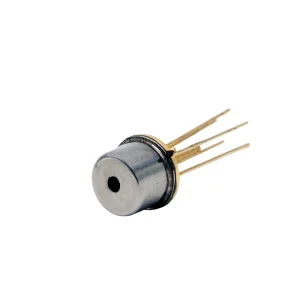
On the other hand, there are voltage measurements instead of current. A 0-10V pressure sensor converts the pressure values into a voltage output ranging from 0-10 volts.
It has the following depictions.
- 0V represents minimum pressure
- 10V represents maximum pressure
- Intermediate voltages correspond to proportional pressure values
4-20mA vs 0-10V Pressure Sensor: Key Differences
4-20mA differs from 0-10V pressure sensors in many ways, ranging from the signal type to the wiring distance. Let’s uncover a few key differences between the two outputs.
| Feature | 4-20mA | 0-10V |
| Signal Type | Current | Voltage |
| Wiring Distance | Excellent | Limited |
| Noise Immunity | Excellent | Moderate |
| Voltage Drop Effect | Minimal | Significant |
| Wiring Cost | Slightly Higher | Lower |
| Accuracy Over Long Distance | Excellent | Reduced |
| Fault Detection | Yes (Live Zero) | 아니요 |
| Industrial Use | Very Common | Common |
Signal Type
Signal transmission depends on the output.
4-20mA uses the current output instead of the voltage. Therefore:
- Long cables have little effect
- Electrical interference has minimal impact
- Voltage loss does not significantly affect measurement
0-10V pressure sensors use the voltage instead of the current. Voltage drops can also cause voltage issues. The typical factors that can alter such pressure sensors are:
- Cable resistance
- Wire size
- Electrical noise
- Ground potential differences
Wiring Comparison
From wiring types to wiring distances, all the conditions help better differentiate the two output forms.
4-20mA has a typical wiring network spread between the following components.
- Pressure transmitter
- 전원 공급 장치
- PLC analog input
- Current loop
It offers long-distance support without dropping the current or voltage.
0-10V pressure sensors are more susceptible to interference and may experience voltage drop when transmitted over long distances. Typical wiring system includes:
- 센서
- 전원 공급 장치
- Signal wire
- Ground wire
Noise Immunity
Electrical noise is the biggest reason behind inaccurate pressure values. Output can also help understand whether you get stable performance and accurate values.
4-20mA is highly resistant to:
- Variable frequency drives (VFDs)
- Large electric motors
- High-current cables
- Welding equipment
- Industrial switching devices
This means it remains stable during electrical noise and provides accurate pressure values under these conditions.
In contrast, 0-10V pressure sensors are prone to electrical noise and experience several value changes. You can get:
- Fluctuating readings
- Signal spikes
- Ground loops
- Voltage offset
- Measurement drift
Cable Distance Comparison
How long do you want to transmit the pressure values? It matters because as the cable distance increases, the chances of better accuracy drop.
- Up to 10 meters, both output systems offer excellent measurements.
- As you increase distance to 50 meters, performance over 4-20mA remains stable while decreasing on the 0-10V output.
Here are a few more situations added here.
| Cable Length | 4-20mA | 0-10V |
| 10 meters | Excellent | Excellent |
| 50 meters | Excellent | Good |
| 100 meters | Excellent | Fair |
| 250 meters | Excellent | Poor |
| 500 meters | Excellent | Not Recommended |
Accuracy Over Long Distances
Accuracy depends on the sensor and signal transmission. Since 4-20mA offers current output and has less effect on the other factors, it is therefore more accurate.
제공합니다:
- Stable over long distances
- Minimal transmission loss
- Better repeatability
- Less affected by cable resistance
A 0-10V output sensor is good only for short distances and experiences several challenges over long-distance transmissions. Common issues are:
- Voltage loss
- Ground offsets
- 전기 간섭
- Signal degradation over distance
Fault Detection
Fault detection can help determine whether the output can detect the fault. Instead of 0 mA for fault detection, the values start at 4 mA and allow early, easy detection of the full fault.
| Signal | Meaning |
| 4 mA | Zero pressure |
| 20 mA | Maximum pressure |
| 0 mA | Broken wire or power failure |
| Below 3.8 mA | Possible fault |
| Above 20.5 mA | Over-range or diagnostic alarm |
Troubleshooting becomes difficult as the 0-10V pressure sensors show 0V for all the failures. Therefore, it is challenging to detect:
- Zero pressure
- Broken wire
- Power failure
Power Consumption
Power requirements vary depending on the voltage or current output systems.
For a 4-20mA, power consumption is as follows:
- 24V DC supply
- Current loop operation
- 낮은 전력 소비
For a 0-10V, here is how power consumption occurs:
- 12–24V DC supply
- Separate power and signal wiring
- Slightly simpler analog circuitry
Typical Applications
Applications vary from one output type to another.
4-20mA pressure sensors are used in the following applications.
- 산업 자동화
- Oil and gas facilities
- 화학 처리 플랜트
- Water treatment systems
- Mining operations
- Power plants
- Food and beverage manufacturing
- 원격 모니터링 시스템
- 프로세스 제어 시스템
- Compressor monitoring
0-10V pressure sensors have the following applications.
- HVAC 시스템
- Building automation
- Laboratory equipment
- Test benches
- Educational equipment
- Small machinery
- Indoor monitoring systems
- 의료 장비
- Air handling units
Which One Should You Choose?
Instead of choosing based on the application, you can select each type based on the following requirements and needs.
| If Your Application Needs… | Best Choice |
| Long cable runs | 4-20mA |
| High electrical noise | 4-20mA |
| 산업 자동화 | 4-20mA |
| Remote pressure monitoring | 4-20mA |
| Process control | 4-20mA |
| Short cable runs | 0-10V |
| HVAC 시스템 | 0-10V |
| Laboratory equipment | 0-10V |
| Indoor automation | 0-10V |
| Lower installation cost | 0-10V |
결론
Both pressure sensor outputs are ideal for different conditions. Depending on the situation, you can prefer any of these. However, 4-20mA is often the standard because of reduced noise and superior accuracy. It is the best option for industrial environments where long cable runs, electrical noise, and system reliability are critical. A 0-10V Pressure Sensor is also a good choice in HVAC systems, laboratories, and other installations with short cable runs and minimal electrical interference.
Are you looking for different ranges and outputs for pressure sensors? 센도 센서 has an exceptional range of pressure sensors and delivers extended performance. Our sensors are known for their higher performance and superior capabilities. Check out our sensors right away!